
07 September 2026
You are a mid-sized freight forwarding company based in Mumbai, specializing in pharmaceutical shipments to European markets. Your operations run smoothly, your team is competent, and your clients seem satisfied. Yet, month after quarter, you watch competitors secure lucrative contracts with major manufacturers while your growth remains stagnant. The difference? they've built strategic partnerships that you simply can't access through traditional business development channels.
This is not an isolated case. across the global freight forwarding industry, thousands of capable companies face identical challenges. They possess the expertise, infrastructure, and dedication required for excellence, yet they remain invisible to potential partners who could transform their business trajectory. The problem is not capability; it is connectivity.
In today's interconnected logistics landscape, freight forwarding success depends increasingly on who you know rather than just what you know. Traditional networking approaches such as cold calling, trade show attendance, and online directories yield diminishing returns. Forwarders invest substantial resources into these activities only to find themselves lost in a sea of generic connections that rarely convert into meaningful business relationships.
The world trade center Alliance's Annual general meeting represents a paradigm shift in how freight professionals approach networking and partnership development. This gathering has evolved beyond a mere corporate formality into a strategic platform where transformative business connections materialize, partnerships crystallize, and growth trajectories alter permanently.
The logistics industry operates within an extraordinarily complex ecosystem. A single international shipment might involve twenty or more stakeholders across multiple countries, each playing a critical role in ensuring cargo reaches its destination safely and efficiently. For freight forwarding companies, the ability to navigate this complexity while maintaining competitive pricing and service quality determines market position.
However, the fundamental challenge extends far beyond operational competence. Consider these industry realities that forwarders confront daily:
Most freight forwarding companies excel within their home regions. They understand local regulations, maintain strong carrier relationships, and possess deep market knowledge. When clients require services outside these comfort zones, forwarders must rely on overseas agents whose capabilities remain largely unknown until tested under pressure. This uncertainty creates risk aversion that limits business expansion.
According to recent data from the world bank, global trade volume continues expanding despite geopolitical uncertainties, creating unprecedented demand for reliable cross-border logistics solutions. Companies unable to access trustworthy international partners effectively cede market share to better-networked competitors.
The freight forwarding industry operates on trust. When you hand over a shipment worth hundreds of thousands of dollars to an overseas agent, you need absolute confidence in their competence and integrity. Building this trust traditionally requires years of interaction, multiple successful transactions, and often costly mistakes along the way.
This trust-building timeline directly impacts critical kpis including lead conversion time and customer acquisition costs. Forwarders spending excessive time vetting potential partners cannot focus on core business development activities, creating a vicious cycle of slow growth.
Perfect information does not exist in international logistics. Forwarders often lack visibility into partner capabilities, pricing structures, service quality metrics, and reliability records. This information asymmetry leads to suboptimal decision-making, increased cost per shipment, and reduced order accuracy as mismatched partners struggle to meet client expectations.
The digital transformation sweeping through logistics has paradoxically made meaningful professional connections more difficult to establish. Social media platforms like LinkedIn generate thousands of superficial contacts but rarely produce the depth of relationship necessary for complex B2B collaboration in freight forwarding.
Trade shows and industry conferences offer face-to-face interaction opportunities but suffer from inherent limitations:
Online freight forwarding directories provide contact information but offer no verification of quality, no mechanism for building trust, and no framework for ongoing collaboration. These platforms essentially digitize phone books without addressing the fundamental challenges of international business partnership development.
Consider the experience of a medium-sized forwarder in Vietnam specializing in electronics exports. Seeking to expand into Latin American markets, they identified a potential partner through an online directory. initial communications seemed promising, pricing appeared competitive, and references checked out correctly.
Six months later, the reality proved devastating:
The financial impact extended beyond direct losses. Management time consumed by crisis resolution prevented pursuit of legitimate growth opportunities. staff morale declined as teams struggled with systemic problems past their control. The company's competitive positioning weakened precisely when market conditions favored expansion.
Industry research consistently demonstrates that poor partner selection creates cascading problems affecting multiple performance dimensions:
When overseas agents lack adequate capabilities or commitment, freight forwarding operations experience immediate deterioration. Documentation errors increase, causing delays and additional costs. Communication breakdowns lead to missed deadlines and dissatisfied clients. Quality inconsistencies force expensive remediation efforts.
Direct costs increase through higher cost per shipment, penalty payments, and insurance claims. indirect costs manifest through reduced capacity utilization as resources address preventable problems rather than productive activities. Opportunity costs accumulate as management attention diverts from growth initiatives.
Perhaps most damaging, consistent service failures undermine market reputation built over years or decades. In an industry where word-of-mouth remains powerful, negative experiences spread rapidly through client networks and industry associations.
These impacts do not occur in isolation. They compound over time, creating structural disadvantages that become increasingly difficult to overcome. Companies with weak networks face:
Many freight forwarding experts turn to on-line directories and databases seeking short get right of entry to international partners. These platforms promise comprehensive listings and easy connection mechanisms. However, they fundamentally misunderstand what makes B2B partnerships successful in logistics.
Directories provide names and contact information but can't verify:
without these important dimensions, directory-based connections resemble dating app matches without background verification. The surface-level compatibility masks potential incompatibilities that emerge only under business pressure.
Industry conferences and trade shows offer valuable learning and exposure opportunities. Attendees gain market intelligence, observe competitor strategies, and potentially initiate new relationships. However, the conference format inherently limits relationship depth.
Typical industry conferences feature:
While conferences serve important purposes, they can't single-handedly solve the deeper networking challenges facing modern freight forwarding companies.
Referrals from satisfied clients or existing partners represent perhaps the most valuable source of new business relationships. These connections arrive pre-vetted to some degree, with implicit endorsement from trusted sources.
However, referral networks exhibit significant limitations:
Companies relying primarily on referrals find themselves trapped within existing network boundaries, unable to break into new markets or access diverse partnership opportunities.
The world trade center Alliance Annual general meeting represents a fundamentally different approach to professional networking in freight forwarding. Rather than treating connection-making as a peripheral activity, The AGM positions relationship development at the center of member value creation.
What distinguishes the WTC Alliance AGM from traditional networking events?
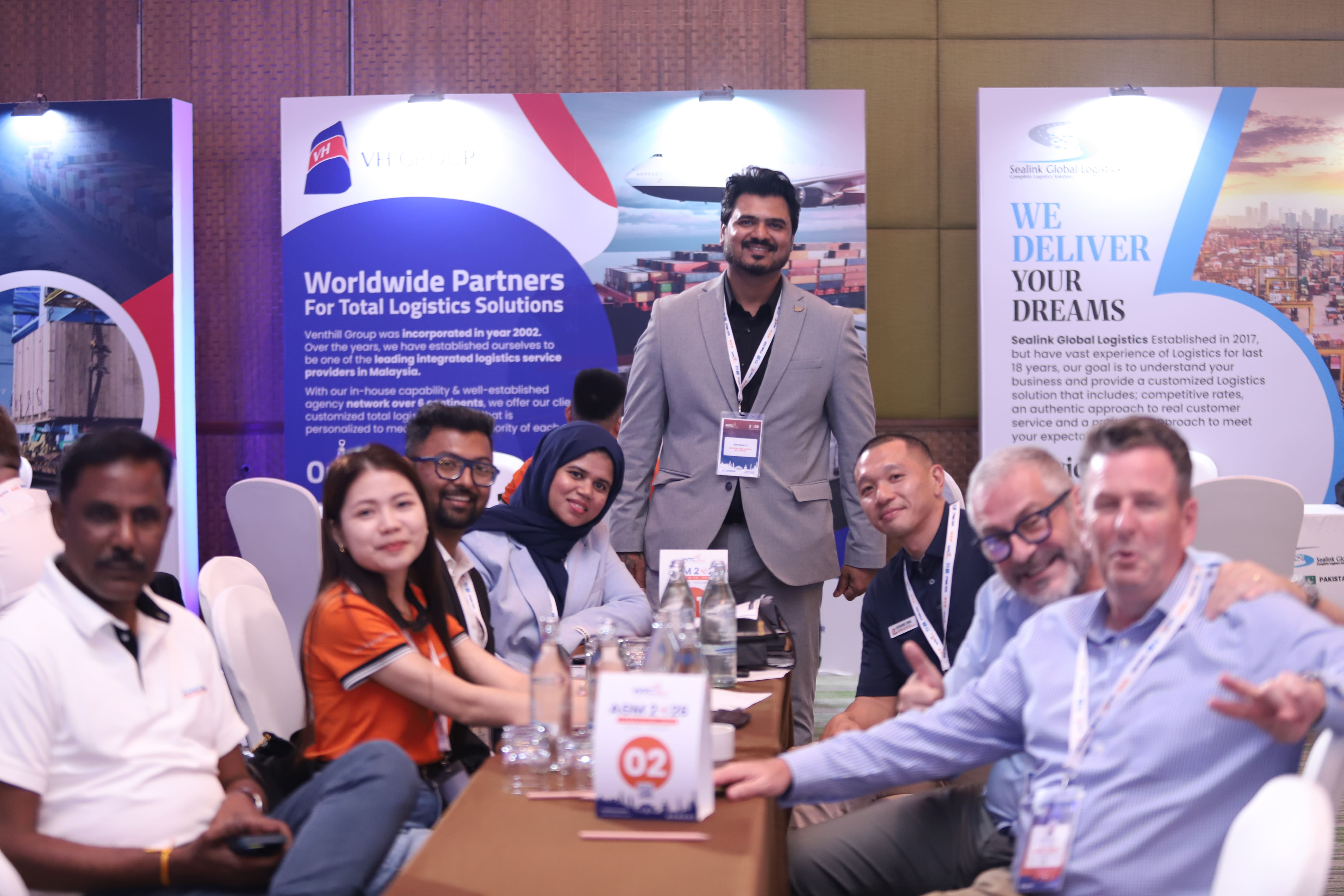
Curated Participation Ensures Quality
Unlike open conferences accepting any registrant, WTC Alliance membership involves vetting processes that establish baseline credibility. Attendees arrive knowing fellow participants have met minimum standards for professionalism and capability. This pre-filtering dramatically increases the likelihood of meaningful connections compared to events mixing serious professionals with casual attendees.
Structured Interaction Maximizes Relationship Depth
The AGM format deliberately designs interaction opportunities that go beyond superficial introductions. Through organized sessions, working groups, and collaborative activities, participants engage in substantive discussions revealing business philosophies, operational approaches, and partnership potential. These deeper interactions create the foundation for lasting business relationships rather than forgotten business cards.
Follow-up Framework Maintains Momentum
Perhaps most importantly, the WTC Alliance provides infrastructure for converting meeting moments into ongoing business relationships. Member directories, communication platforms, and collaboration tools enable continued engagement long after the event concludes. This systematic follow-up support addresses the primary weakness of traditional networking where initial enthusiasm dissipates without structured maintenance.
At the 2024 AGM, a European forwarder specializing in automotive logistics connected with a Southeast Asian counterpart during a breakout session discussing e-commerce fulfillment challenges. Their conversation revealed complementary capabilities: the European company possessed sophisticated warehouse management systems while the Asian partner offered established last-mile delivery networks across six countries.
Within 9 months of their AGM introduction, the two companies had jointly launched an integrated service offering that captured significant market share in cross-border e-commerce logistics. Both reported revenue growth exceeding 30% of their respective regions attributable directly to this partnership initiated at the WTC Alliance gathering.
During a workshop focused on reducing customs clearance time, participants from 3 different continents collaborated on identifying common bottlenecks and sharing successful mitigation strategies. The discussion revealed that many delays stemmed from similar documentation issues that could be addressed through standardized templates and proactive communication protocols.
Inspired by this exchange, several members formed a working group that developed best practice guidelines now adopted by dozens of WTC Alliance companies worldwide. participants report average customs clearance time reductions of 40% following implementation of these collaborative innovations.
A North American forwarder facing potential loss of a key account requiring expanded global coverage attended the AGM specifically seeking reliable partners in Africa and the Middle East. Through intensive networking sessions, they identified and vetted 3 potential partners whose capabilities matched their exact requirements.
The resulting partnership enabled them to confidently propose expanded geographic coverage to their at-risk client. Not only was the account retained, but the client subsequently increased shipment volumes by 60%, citing the improved global reach as a decisive factor in their decision.
While individual success stories illustrate AGM impact, aggregate data reveals systematic benefits for participating companies:
Members reporting active AGM participation demonstrate lead conversion time improvements averaging 35% compared to non-participants. The pre-established relationships and trust foundations developed during the event significantly shorten sales cycles for subsequent business development activities.
Partnerships formed through WTC Alliance networking show superior operational metrics including improved order accuracy rates, reduced cost per shipment through optimized routing and resource sharing, and enhanced capacity utilization through better load balancing across partner networks.
Companies leveraging WTC Alliance networking consistently outperform industry averages in client retention, referral generation, and market share growth. The network effect creates compounding advantages that widen competitive gaps over time.
Beyond the annual gathering itself, WTC Alliance provides ongoing infrastructure supporting member networking and collaboration objectives:
With members spanning 120+ countries, the alliance offers genuine worldwide coverage while maintaining local market knowledge essential for effective freight forwarding operations. members access both breadth of geographic presence and depth of regional expertise.
Membership criteria and ongoing performance monitoring ensure that network connections meet baseline quality expectations. This verification reduces due diligence burden while increasing confidence in new partnership engagements.
Digital platforms facilitate ongoing communication, opportunity sharing, and joint business development among members. These tools extend the networking benefits of the AGM throughout the entire year, maintaining relationship momentum between physical gatherings.
Educational sessions, best practice sharing, and professional development programs keep members current on industry trends, regulatory changes, and innovative approaches. This knowledge-sharing culture strengthens overall network capability while providing individual member benefits.
Unique to the WTC Alliance, financial protection programs mitigate risks associated with international partnerships. These safeguards encourage bolder collaboration and faster relationship development by reducing downside risks that typically inhibit cross-border business expansion.
For detailed information about membership benefits and networking opportunities, explore the WTC Alliance services page or learn about our global reach.
Before pursuing new networking strategies, forwarders should honestly evaluate existing approaches and outcomes. Consider these diagnostic questions:
Honest assessment often reveals significant improvement opportunities that networking-focused strategies can address.
Companies achieving exceptional results through WTC Alliance participation typically approach networking strategically rather than opportunistically:
Before attending any networking event, identify specific capabilities, geographies, or market segments where external partnerships would accelerate your growth. Clear objectives enable focused conversations and efficient relationship prioritization.
Networking succeeds when mutual benefit exists. Prepare clear articulations of what your company offers potential partners, including unique capabilities, geographic strengths, specialized expertise, or capacity availability.
Treat networking connections as long-term assets requiring cultivation rather than transactional interactions. Allocate time and resources for follow-up communications, information sharing, and collaborative exploration even when immediate business opportunities aren't apparent.
As your partnership network grows, actively facilitate connections among your contacts. This brokerage role increases your value to the network while generating goodwill that returns indirect benefits over time.
Many forwarders recognize networking importance but struggle with practical implementation challenges:
business demands constantly compete for limited management attention. However, viewing networking as investment rather than cost reframes the priority calculation. The revenue potential from a single quality connection typically exceeds returns from equivalent time spent on routine operational activities.
Small and medium-sized forwarders may lack dedicated business development personnel. WTC Alliance membership provides networking infrastructure that amplifies individual effort, enabling smaller teams to achieve outsized networking results.
Not every company can attend every event physically. WTC Alliance offers digital participation options and year-round digital networking tools that extend benefits beyond physical gathering limitations.
International networking inevitably involves cross-cultural communication challenges. The WTC Alliance community includes members experienced in bridging cultural gaps, and the organization provides resources supporting effective cross-border relationship development.
The freight forwarding industry keeps evolving hastily, and networking procedures ought to adapt as a result. Several trends will likely shape future networking effectiveness:
Technology-Enabled Matching
artificial intelligence and advanced analytics increasingly facilitate identity of compatible partners based on operational profiles, service offerings, and business objectives. These tools complement human judgment rather than replacing it, making networking more efficient while preserving relationship authenticity.
Niche Community Formation
Generalist networks give way to specialized communities focused on specific verticals, modalities, or geographic regions. These concentrated networks offer deeper expertise sharing and more relevant connection opportunities for participants with focused business models.
Integration With Operational Systems
Networking platforms increasingly integrate with transportation management systems, customer relationship management tools, and other operational software. This integration reduces friction in partnership activation and enables seamless collaboration once relationships establish.
Emphasis on Sustainability and Ethics
Environmental, social, and governance considerations increasingly influence partnership decisions. Networks facilitating transparency around sustainability practices and ethical standards will attract members seeking alignment with evolving stakeholder expectations.
Forwarders proactively adapting their networking strategies position themselves advantageously as industry evolution accelerates. Key positioning moves include:
Relying on single networking channels creates vulnerability. Successful companies cultivate relationships across multiple platforms, geographic contexts, and professional communities to ensure resilient partnership access regardless of how specific channels evolve.
Just as companies invest in operational skills, they should develop internal networking competencies. training staff in relationship-building techniques, cross-cultural communication, and collaborative business development creates sustainable competitive advantages.
The most successful network participants contribute value beyond mere participation. Sharing knowledge, facilitating others' connections, and providing mentorship to newer members generates reciprocal benefits while strengthening overall network health.
The networking moments that define WTC Alliance's Annual general meeting represent more than pleasant social interactions or professional courtesy exchanges. They embody a fundamental truth about modern freight forwarding success: in an industry defined by complexity and interdependence, the quality of your network determines the ceiling of your achievement.
Companies struggling with stagnant growth, geographic limitations, or competitive pressures often attribute these challenges to market conditions, pricing pressures, or operational shortcomings. While these factors certainly matter, the root cause frequently traces back to network insufficiency. without access to the right partners, even excellent operators can't fully capitalize on market opportunities or deliver optimal client solutions.
The evidence is compelling: forwarders who prioritize strategic networking through platforms like WTC Alliance consistently outperform peers on key KPIs including revenue growth, profitability, client satisfaction, and market positioning. The investment in relationship development yields returns exceeding most alternative business development expenditures.
Your company's next breakthrough partnership, market entry, or capability enhancement may be one conversation away. That conversation becomes exponentially more likely when you participate in environments designed specifically to facilitate meaningful professional connections among qualified, motivated industry peers.

The question isn't whether networking matters for your freight forwarding business. The question is whether your current networking approach delivers the results your company's potential demands.
If you are ready to transform your networking from hit-or-miss activity into a systematic growth driver, we invite you to explore WTC Alliance membership. Our community of verified, committed freight forwarding professionals spans the globe, offering connection opportunities impossible to replicate through traditional networking methods.
Begin your journey:
Ready to connect with freight forwarding professionals who can accelerate your growth? visit WTC Alliance today and take the first step toward network-enabled success.
Copyright © 2026 All Rights Reserved by WORLD TOP CARGO ALLIANCE LTD
Design and Developed by infinGlobal