
07 October 2026
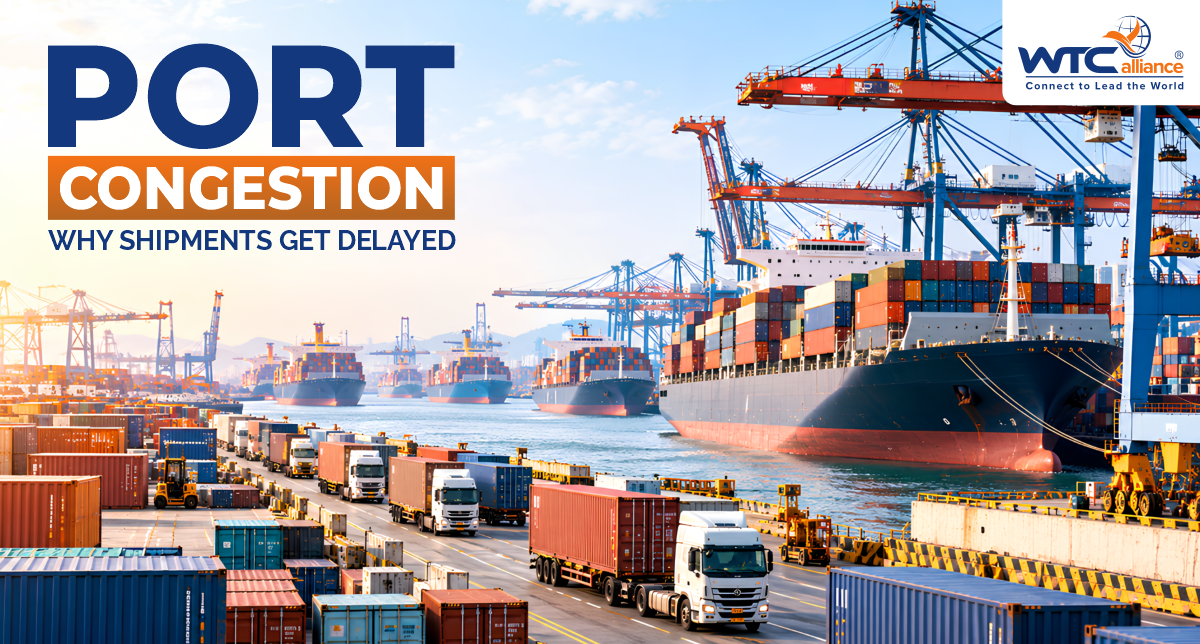
A shipment can leave its origin on schedule and still arrive late because of what happens at the port. Port congestion occurs when vessels, containers or cargo exceed the capacity of terminals and connected transport systems, creating vessel waiting times, slower handling, missed connections and delays across the wider supply chain.
The World Bank's Container Port Performance Index measures how efficiently container ships move through ports and highlights how disruptions can affect port performance. Meanwhile, UNCTAD's Review of Maritime Transport shows how rerouting, geopolitical disruptions and changing shipping patterns can increase pressure on maritime networks.
Port congestion rarely has a single cause. A sudden increase in cargo volumes can overwhelm terminal capacity, while bad weather can slow vessel movements and crane operations. Labour disruptions, equipment shortages and infrastructure limitations can create additional bottlenecks.
Geopolitical events can make the situation even more complicated. When vessels avoid a major shipping route, they may take longer journeys or move through alternative ports. This can change vessel arrival patterns and place additional pressure on terminals that were not prepared for the extra volume.
UNCTAD's analysis of global trade and shipping disruptions highlights how geopolitical uncertainty can affect transport routes, costs and supply-chain reliability.
Rerouting can also create a domino effect. When vessels arrive late, containers may miss connecting services. Equipment can become unevenly distributed, while terminals may suddenly have several delayed vessels arriving close together.
The most obvious consequence is delay, but the financial impact can extend much further.
A delayed container may miss a delivery appointment, production deadline or connecting vessel. When cargo or equipment remains at a terminal longer than expected, businesses may also face storage, detention or demurrage charges.
This is why businesses need to consider more than the quoted freight rate when calculating shipping costs. WTC Alliance's guide on how to avoid hidden costs in global shipping explains how additional charges can increase the final cost of an international shipment.
Congestion can also affect container availability. When equipment remains stuck at busy terminals, exporters in another location may struggle to secure empty containers. WTC Alliance's article on container shortages and keeping shipments moving explains how equipment imbalances can create further disruption across freight networks.
For businesses operating with tight inventory schedules, even a short delay can affect warehousing, production, customer deliveries and cash flow.
Forwarders cannot eliminate port congestion, but they can prepare for it.
Monitoring port performance and shipping conditions, communicating with carriers and evaluating alternative gateways can help identify problems before they become major disruptions.
In some cases, routing through another port or using an alternative inland connection may be practical. In others, adjusting the booking schedule or building additional transit time may be more appropriate.
This is where a freight forwarder's broader logistics knowledge becomes valuable. WTC Alliance's guide on how freight forwarders help businesses ship globally explains how forwarders coordinate different parts of an international shipment rather than simply arranging transportation.
The key is visibility before the delay becomes a crisis.
Port congestion is rarely limited to the terminal itself. A disruption can affect vessels, containers, trucks, warehouses, production schedules and final deliveries across the wider supply chain.
For freight forwarders, this makes planning and communication increasingly important. Customers may not be able to control congestion, but they can benefit from a logistics partner that identifies potential problems early and presents practical alternatives.
WTC Alliance's guide to reducing freight costs without compromising service also highlights the importance of balancing transportation cost with reliability and service performance.
As global shipping networks continue to face changing trade patterns, geopolitical disruptions and capacity pressures, the ability to anticipate congestion can become just as valuable as the ability to move cargo.
For freight professionals looking to strengthen international connections and stay informed about developments affecting global logistics, explore WTC Alliance.
Copyright © 2026 All Rights Reserved by WORLD TOP CARGO ALLIANCE LTD
Design and Developed by infinGlobal